Glandular Disorder May 2026
A glandular disorder, also known as an , occurs when a gland produces too much or too little of a hormone, or when the body does not respond to hormones correctly . These disorders can affect vital functions including metabolism, growth, and reproduction . Core Classification of Disorders
: Occurs when the specific hormone-producing gland (e.g., thyroid) itself stops working correctly . glandular disorder
: Occurs when a "master gland," such as the pituitary, fails to regulate other glands properly . Common Specific Disorders A glandular disorder, also known as an ,
Disorders are often named after the specific gland involved: A glandular disorder
Glandular issues are primarily categorized by the nature of the hormonal imbalance:
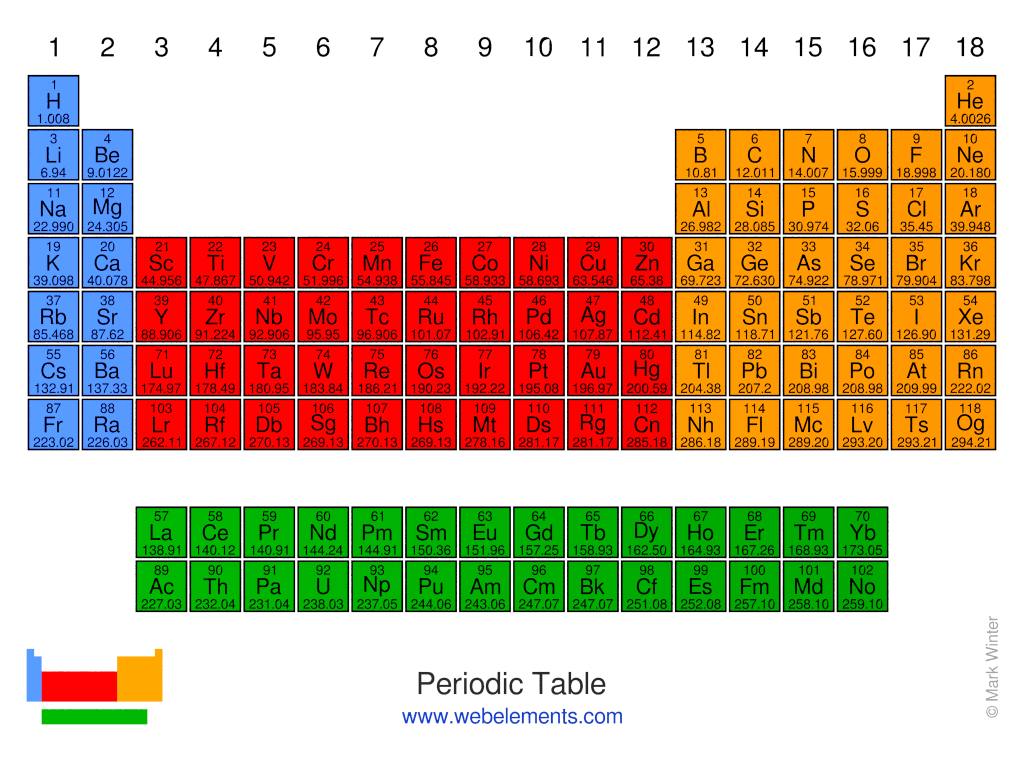
The International Union of Pure and Applied Chemistry (IUPAC) confirmed the names of elements 113, 115, 117, and 118 as:
This followed a 5-month period of public review after which the names earlier proposed by the discoverers were approved by IUPAC.
On 1 May 2014 a paper published in Phys. Rev. Lett by J. Khuyagbaatar and others states the superheavy element with atomic number Z = 117 (ununseptium) was produced as an evaporation residue in the 48Ca and 249Bk fusion reaction at the gas-filled recoil separator TASCA at GSI Darmstadt, Germany. The radioactive decay of evaporation residues and their α-decay products was studied using a detection setup that allows measurement of decays of single atomic nuclei with very short half-lives. Two decay chains comprising seven α-decays and a spontaneous fission each were identified and assigned to the isotope 294Uus (element 117) and its decay products.
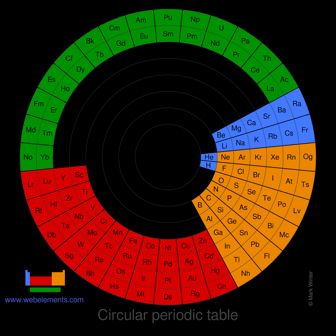
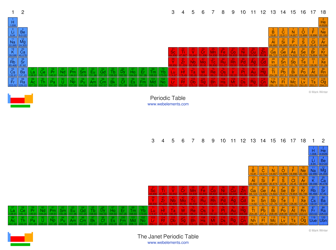
Click on the images below to see images of the periodic table in a variety of styles.
 WebElements