jaicompris.com
Cours et exercices corrigés en vidéo
Vous voulez me soutenir ?
Cliquez sur l'image !
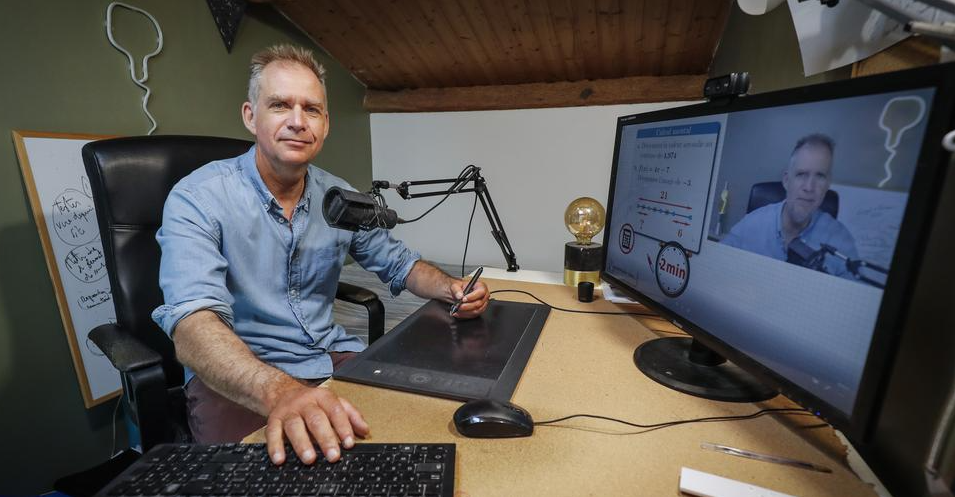
J'ai réalisé les vidéos de maths de cet ouvrage !

Des milliers de cours et d'exercices en vidéo, comme avec un professeur particulier. La programmation Python expliquée pas à pas. Apprends les mathématiques à ton rythme avec des ressources innovantes. Que tu sois en difficulté ou déjà à l'aise, tu trouveras des exercices adaptés à ton niveau pour progresser rapidement.
In the contemporary landscape, fashion has shifted toward a celebration of individuality and sustainability. The rise of digital "style galleries" via social media has democratized fashion, moving the influence away from a few elite editors and into the hands of global creators. Today’s style is defined by eclecticism—mixing vintage finds with high-tech fabrics, or blurring the lines between gendered aesthetics. There is a growing emphasis on the ethics of production, as modern consumers increasingly view their style choices as reflections of their personal values regarding the environment and labor rights.
Historically, women’s attire was often designed more for social signaling than for physical comfort. The Victorian era, defined by corsetry and heavy layering, reflected a rigid social structure that prioritized poise over mobility. However, the dawn of the twentieth century brought about a radical departure from these constraints. The "Flapper" style of the 1920s, characterized by dropped waists and shorter hemlines, was not merely a trend; it was a sartorial declaration of independence following the suffrage movement. This period proved that when women gained more freedom in their lives, their wardrobes followed suit, prioritizing movement and audacity.
As the decades progressed, the style gallery expanded to include more diverse influences and utilitarian needs. During World War II, the necessity of women entering the workforce led to the popularization of trousers and more structured, masculine tailoring. This shift laid the groundwork for the "Power Dressing" era of the 1980s, where bold shoulders and sharp suits became armor for women entering the corporate boardroom. These stylistic choices were strategic, using the language of clothing to command respect in spaces historically dominated by men.
Ultimately, the study of women’s fashion reveals that style is never static. It is a continuous dialogue between the wearer and the world. Whether through a minimalist wardrobe or an avant-garde ensemble, fashion remains a powerful tool for identity. A gallery of women’s style is, therefore, more than a collection of garments; it is a testament to the resilience, creativity, and evolving agency of women throughout history.
The evolution of women’s fashion is a dynamic chronicle of cultural shifts, political movements, and the persistent pursuit of self-expression. Beyond the simple utility of clothing, a style gallery serves as a visual history of how women have navigated and redefined their roles in society. From the restrictive silhouettes of the nineteenth century to the boundary-breaking aesthetics of the modern era, fashion has consistently functioned as both a mirror of the present and a catalyst for future change.
In the contemporary landscape, fashion has shifted toward a celebration of individuality and sustainability. The rise of digital "style galleries" via social media has democratized fashion, moving the influence away from a few elite editors and into the hands of global creators. Today’s style is defined by eclecticism—mixing vintage finds with high-tech fabrics, or blurring the lines between gendered aesthetics. There is a growing emphasis on the ethics of production, as modern consumers increasingly view their style choices as reflections of their personal values regarding the environment and labor rights.
Historically, women’s attire was often designed more for social signaling than for physical comfort. The Victorian era, defined by corsetry and heavy layering, reflected a rigid social structure that prioritized poise over mobility. However, the dawn of the twentieth century brought about a radical departure from these constraints. The "Flapper" style of the 1920s, characterized by dropped waists and shorter hemlines, was not merely a trend; it was a sartorial declaration of independence following the suffrage movement. This period proved that when women gained more freedom in their lives, their wardrobes followed suit, prioritizing movement and audacity.
As the decades progressed, the style gallery expanded to include more diverse influences and utilitarian needs. During World War II, the necessity of women entering the workforce led to the popularization of trousers and more structured, masculine tailoring. This shift laid the groundwork for the "Power Dressing" era of the 1980s, where bold shoulders and sharp suits became armor for women entering the corporate boardroom. These stylistic choices were strategic, using the language of clothing to command respect in spaces historically dominated by men.
Ultimately, the study of women’s fashion reveals that style is never static. It is a continuous dialogue between the wearer and the world. Whether through a minimalist wardrobe or an avant-garde ensemble, fashion remains a powerful tool for identity. A gallery of women’s style is, therefore, more than a collection of garments; it is a testament to the resilience, creativity, and evolving agency of women throughout history.
The evolution of women’s fashion is a dynamic chronicle of cultural shifts, political movements, and the persistent pursuit of self-expression. Beyond the simple utility of clothing, a style gallery serves as a visual history of how women have navigated and redefined their roles in society. From the restrictive silhouettes of the nineteenth century to the boundary-breaking aesthetics of the modern era, fashion has consistently functioned as both a mirror of the present and a catalyst for future change.
Découvre la puissance de Python pour résoudre des problèmes mathématiques.
Rejoins des milliers d'élèves qui ont déjà amélioré leurs résultats en mathématiques